
Evaluating Provenance
When acquiring statement antique furniture, understanding provenance is the difference between purchasing a decorative object and investing in a piece of design history. How do you evaluate the origin and trade valuation of 1920s European Modernist or Art Deco furniture?
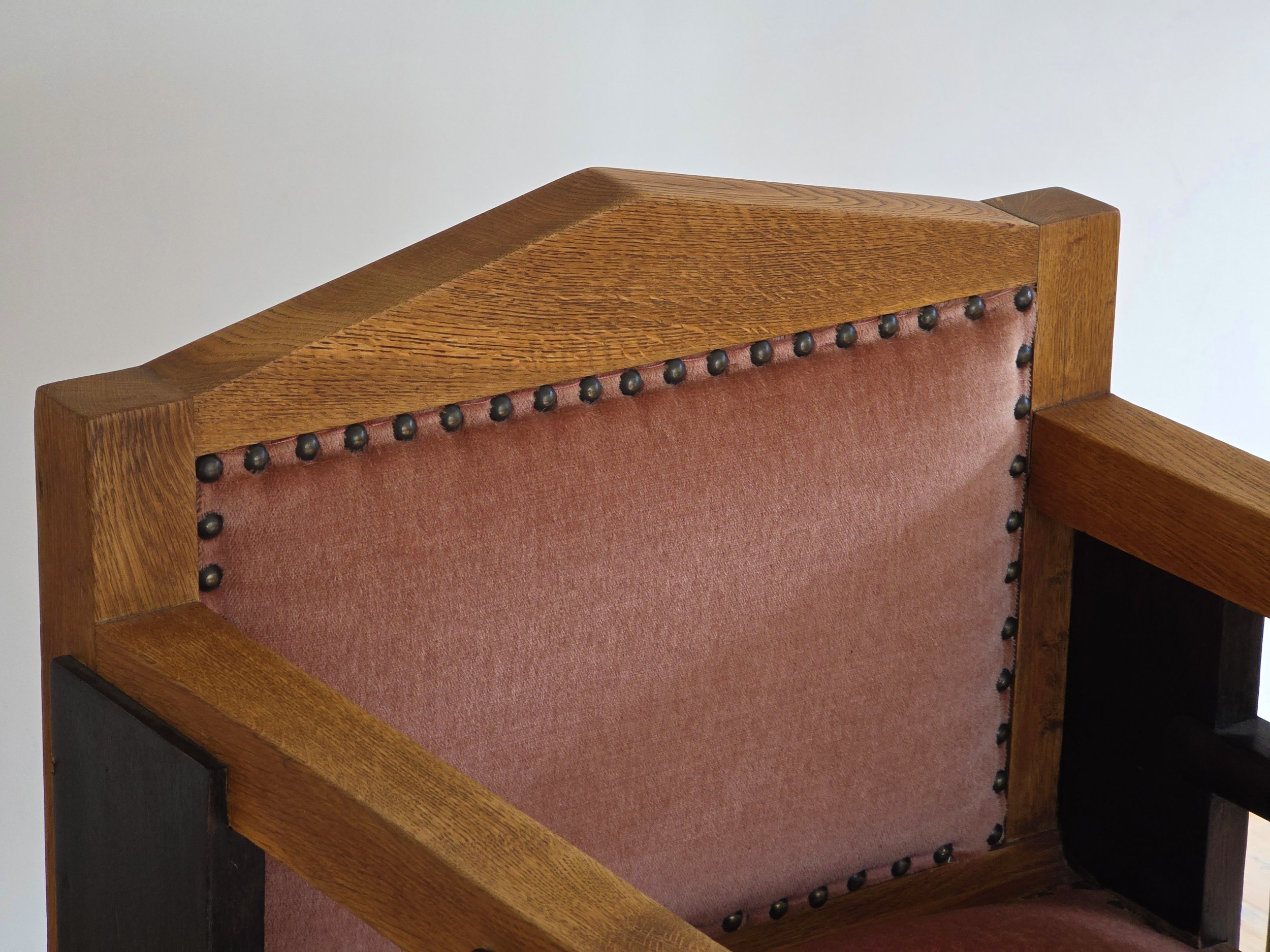
True valuation requires tracing a piece back to its original commission and understanding the architectural context of its designer. Often gleening as much information as we can from the seller, tracing it’s journey and provenance. We recently sourced and evaluated a pair of 1928 club chairs designed by the Dutch architect Jacobus Lambertus "Jacques" Grubben. Retaining their original rose velvet upholstery, these chairs are a rare and unique pair of solid oak chairs from the orignal set that were purpose made for the Grubben designed Venlo Auction House Meeting Room in the Netherlands.
At The Norfolk House, we curate statement furniture sourced for its story. Grubben's architectural background is evident in the structural integrity and modernist lines of his furniture, placing these chairs at the precise intersection of the Art Deco movement and early 20th-century Modernism. When evaluating such pieces, we believe in preserving original materials and critically, preserving the woodwork’s orignal patina is paramount. Thus maintaining the historical integrity and story of the object, ensuring the furniture continues to serve as both a functional asset and a piece of tangible design history, wheter it be a statement peice in a contemporary or layering in heritage interior.